Imagine waking up to spotless glasses, softer skin, and water that tastes truly pure. But when you start researching water treatment, you quickly hit a fork in the road: reverse osmosis vs water softener. These two systems solve very different problems, and choosing the wrong one can waste your time and money. In this guide, we’ll demystify both technologies, compare their strengths, and help you decide which one fits your home’s needs in 2026.
We’ve evaluated six top-rated systems from leading brands like iSpring, Waterdrop, and DREO. Whether you’re dealing with hard water spots, a funny taste, or concerns about contaminants, we’ll point you to the right solution. Let’s dive into the details.



Buying Guide: How to Choose Between Reverse Osmosis and Water Softeners
Before you invest in any water treatment system, you need to understand what each technology does. Water softeners primarily target hardness minerals like calcium and magnesium, which cause scale buildup and soap scum. Reverse osmosis (RO) systems, on the other hand, use a semi-permeable membrane to remove a wide range of contaminants, including heavy metals, fluoride, and PFAS. Many modern RO systems also add beneficial minerals back into the water.
Contaminant Removal Capabilities
If your main concern is water quality for drinking and cooking, reverse osmosis is the clear winner. RO systems reduce up to 99% of common contaminants, including lead, chlorine, and volatile organic compounds. For example, the Waterdrop G5P700A Alkaline Mineral Reverse Osmosis features an 8-stage filtration process that removes PFOA, PFOS, and heavy metals while adding essential minerals like calcium and magnesium.
Water softeners, however, don’t remove contaminants. They only exchange hardness ions with sodium or potassium. If you’re worried about drinking water safety, a softener alone won’t suffice. You’d need an RO system or a combination of both.
Water Hardness and Scale Buildup
If you’re dealing with white scale on faucets, stiff laundry, or dry skin, hard water is likely the culprit. A water softener is the most effective solution for these issues. It prevents scale formation and extends the life of your appliances. However, softeners don’t improve taste or remove chemical contaminants.
For homes with both hard water and contamination concerns, consider a whole-house water softener paired with an RO system at the kitchen sink. This combo gives you the best of both worlds. Check out our best water softener for top recommendations.
Installation and Space Requirements
Traditional under-sink RO systems require some plumbing work and space under your counter. Tankless models, like the Waterdrop G5P500A Reverse Osmosis System, are compact and free up to 70% of under-sink space. They also deliver high flow rates, filling a cup in seconds.
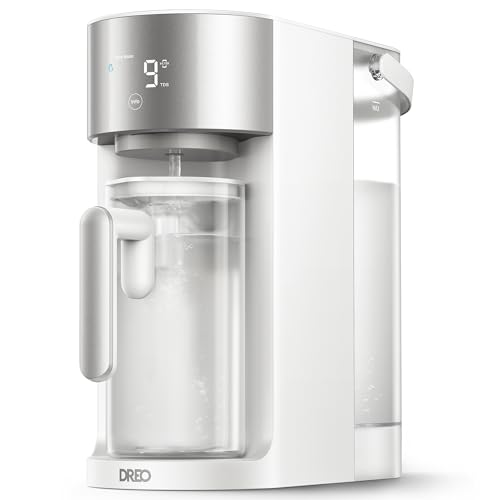
If you rent or prefer a no-drill option, countertop RO systems like the DREO Reverse Osmosis Water Filter Countertop are install-free. Just plug them in and fill the tank. Water softeners, however, are typically installed at your main water line and require more space, often in a garage or utility room.
Maintenance and Operating Costs
RO systems require periodic filter replacements. The frequency depends on usage and water quality. Some models, like the iSpring RCC7AK-BN NSF Certified, 75 GPD, have transparent housings so you can visually inspect the filters. Others, like DREO’s countertop models, feature filter life indicators and simple twist-to-replace cartridges.
Water softeners also need regular maintenance, including adding salt and cleaning the brine tank. Over time, softeners may require resin replacement. Consider your willingness to perform routine upkeep when choosing between the two.
Final Thoughts
In the battle of reverse osmosis vs water softener, there’s no one-size-fits-all answer. If your priority is pure, great-tasting drinking water free from contaminants, a reverse osmosis system is the way to go. The Waterdrop G5P700A Alkaline Mineral Reverse Osmosis offers exceptional filtration with added minerals, while the DREO Reverse Osmosis Water Filter Countertop provides a convenient, install-free option for renters or small spaces. On the other hand, if you’re battling hard water scale and soap scum, a traditional water softener remains the most effective solution. For many households, combining both systems delivers the ultimate water quality. Assess your specific needs, and you’ll make the right choice.
Frequently Asked Questions
Can I use a reverse osmosis system with hard water?
Yes, but hard water can cause the RO membrane to scale and reduce its lifespan. Many homeowners install a water softener before the RO system to protect it. Alternatively, some RO systems have a sediment pre-filter, but for significant hardness, a softener is recommended.
Does a water softener remove contaminants like lead or chlorine?
No, water softeners only exchange hardness minerals with sodium or potassium. They do not remove chemical contaminants, heavy metals, or microorganisms. For that, you need a reverse osmosis system or other specialized filtration.
What’s the difference between a countertop RO and an under-sink RO?
Countertop RO systems sit on your counter and don’t require plumbing, making them ideal for renters or temporary setups. Under-sink systems are installed out of sight and typically have higher capacity and efficiency. Both provide the same level of filtration, but under-sink models often have larger tanks and faster flow rates.
How often should I replace RO filters?
It depends on your water quality and usage. Most manufacturers recommend replacing pre-filters every 6 to 12 months and the RO membrane every 2 to 3 years. Some systems have indicator lights or TDS meters to help you track filter life. For more details, check our whole house water filter guide for maintenance tips.