Living in a mobile home comes with unique challenges, especially when it comes to water quality. Hard water can wreak havoc on your plumbing, leave unsightly stains on fixtures, and make your skin feel dry and itchy. If you’ve noticed a chalky buildup on your faucets or your water heater seems to be working overtime, it’s time to consider a water softener. This guide will walk you through the best water softeners for mobile homes, focusing on models that are compact, efficient, and easy to install. We’ve evaluated top brands like Aquasure and Kenmore to help you find the perfect fit for your home. For more on protecting your entire home’s water supply, check out our guide on the best whole house water filter.


Buying Guide: What to Look for in a Mobile Home Water Softener
Choosing the right water softener for your mobile home involves more than just picking the first one you see. You need to consider your household size, water hardness level, and the physical space available. Here are the key factors to keep in mind.
Grain Capacity and Household Size
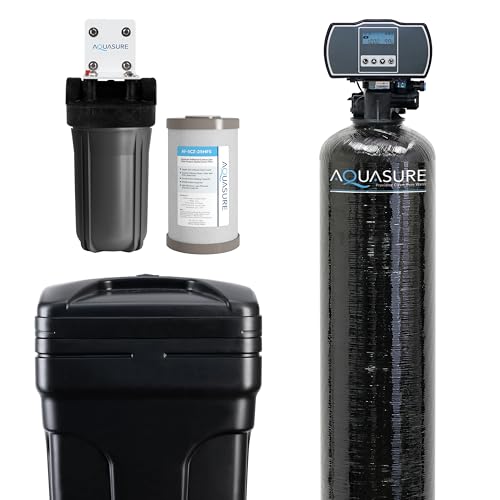
The grain capacity of a water softener determines how much hardness it can remove before needing to regenerate. For a mobile home with one to two bathrooms and a family of up to four people, a 32,000-grain system like the Aquasure Harmony Series 32,000 Grains Whole House is often sufficient. Larger households or those with very hard water may benefit from a 40,000 or 48,000-grain model. Overestimating your needs can lead to wasted salt and water, while underestimating can result in hard water breakthrough.
Metered vs. Timer-Based Regeneration
Metered water softeners use a digital control head that tracks your actual water usage and regenerates only when needed. This is far more efficient than timer-based systems, which regenerate on a fixed schedule regardless of usage. All the models we recommend feature automatic digital metered control heads, which can save you up to 20% on salt and water compared to older timer-based units. For more on how these systems work, read our comparison of reverse osmosis vs water softener.
Physical Dimensions and Installation
Mobile homes often have limited space, especially in utility closets or under sinks. Before purchasing, measure the area where you plan to install the softener. The Kenmore 350 Whole House Water Softener System is known for its compact footprint, making it a great choice for tight spaces. Also, consider the type of connections your plumbing has. Most modern softeners come with a bypass valve and standard 3/4-inch connections, but you may need additional fittings for mobile home plumbing.
Additional Filtration Features
Some water softeners come with built-in pre-filters that remove sediment, chlorine, and other contaminants. This is particularly beneficial for mobile homes on well water, where sediment and iron can be an issue. The Aquasure Harmony Series 40,000 and 50,000-grain models include a triple-purpose sediment, GAC, and zinc pre-filter that removes 99% of harmful contaminants. For well water specifically, see our guide on the best water softener for well water.
Final Thoughts
After evaluating the top contenders, our top recommendation for most mobile homes is the Aquasure Harmony Series 32,000 Grains Whole House for its perfect balance of capacity, efficiency, and value, especially for smaller households. For larger families or those with higher water usage, the Aquasure Harmony Series 40,000 Grains Whole House offers the added benefit of a built-in pre-filter and a higher grain capacity, ensuring soft, clean water throughout your home. Both models come with a 5-year warranty and lifetime tech support, giving you peace of mind.
Frequently Asked Questions
Here are answers to some common questions about water softeners for mobile homes.
Can I install a water softener in a mobile home myself?
Yes, many homeowners install a water softener themselves, especially if they have basic plumbing skills. Most modern units come with a bypass valve and clear instructions. However, if your mobile home has PEX or polybutylene plumbing, you may need additional fittings or professional help to ensure a leak-free installation.
What size water softener do I need for a mobile home?
For a typical mobile home with 1-2 bathrooms and a family of up to four, a 32,000-grain unit is usually sufficient. For larger homes or those with very hard water (over 10 grains per gallon), consider a 40,000 or 48,000-grain model. Always check your water hardness level with a test kit before buying.
Will a water softener damage my mobile home’s plumbing?
No, a properly installed water softener will protect your plumbing by preventing scale buildup. Hard water can clog pipes and reduce water flow over time, so softening the water actually extends the life of your plumbing and appliances. Just be sure to use the correct salt and follow maintenance guidelines.
How much maintenance does a water softener need?
Minimal maintenance is required. You’ll need to refill the salt tank every few months, and occasionally clean the brine tank to prevent salt bridges. The digital control heads on modern units will alert you when salt is low or if there’s a problem. With proper care, a quality water softener can last 10-15 years.