You’re tired of bottled water’s cost and plastic waste, and your tap water just doesn’t taste right. An under sink reverse osmosis system is the ultimate solution, filtering out impurities and delivering restaurant-quality water on demand. But with so many models on the market, how do you choose the right one for your home? This guide breaks down the best reverse osmosis system under sink options, focusing on filtration power, ease of installation, and long-term value.
Whether you’re a first-time buyer or upgrading an old filter, we’ve got you covered. We’ve reviewed top brands like iSpring, APEC WATER, and Waterdrop to help you make an informed decision. For a broader look at water purification, check out our guide on the best reverse osmosis systems.




How to Choose the Best Under Sink Reverse Osmosis System
Selecting the right RO system involves more than just picking a popular model. You need to consider your household’s water consumption, the space under your sink, and the specific contaminants you want to remove. Here are the key factors to weigh before making a purchase.
Filtration Stages and Contaminant Removal
The number of filtration stages directly impacts water purity. A standard 5-stage system removes chlorine, lead, and other common impurities, while advanced 8-, 10-, or even 7-stage systems add alkaline remineralization or UV protection for enhanced taste and safety. Look for certifications like NSF/ANSI 58, which validates the system’s ability to reduce total dissolved solids (TDS) and specific contaminants.
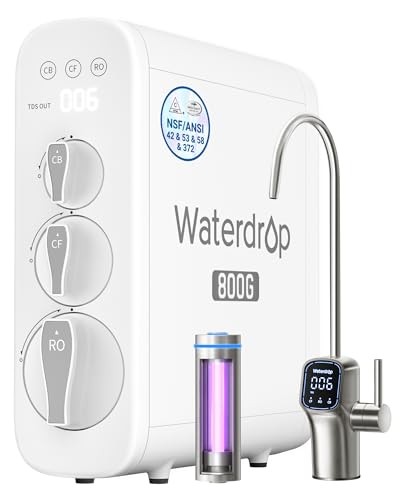
For example, the iSpring RCC7AK-BLK, NSF/ANSI 58 Certified is certified to reduce up to 99% of over 1,000 contaminants, including fluoride and arsenic. If you’re concerned about emerging pollutants like PFAS, consider a system with a dedicated carbon block, such as the Waterdrop G3P800, which is certified against NSF/ANSI 53 for PFAS reduction.
Tankless vs. Traditional Tank-Based Systems
Traditional RO systems come with a storage tank that holds purified water, but they can be bulky and may run out of water during heavy use. Tankless systems, on the other hand, filter water on demand, providing an endless supply and saving valuable under-sink space. They also eliminate the risk of bacterial growth in a stagnant tank.
If you have a large family or entertain often, a tankless model like the Waterdrop G5P500A Reverse Osmosis System offers 500 GPD capacity and a compact design. For smaller households, a tank-based system like the APEC Water ROES-50 is a reliable, space-saving choice that still delivers excellent filtration.
Installation and Maintenance
Consider your DIY skills and the layout of your kitchen. Many systems feature quick-connect fittings and color-coded tubing for easy installation, while others require drilling a hole in your countertop for a dedicated faucet. Some models, like the iSpring RCC7AK-BN, feature a patented top-mounted faucet design that simplifies installation from above the sink.
Maintenance is another crucial factor. Look for systems with transparent filter housings that let you see when a filter needs replacing. Filter replacement costs and frequency vary, so factor that into your long-term budget. For a hassle-free experience, consider a tankless model with a smart display that tracks filter life, such as the Waterdrop G3P600.
Water Efficiency and Flow Rate
Traditional RO systems waste a significant amount of water, but modern models are much more efficient. Look for a low pure-to-drain ratio, such as 2:1 or 3:1, to minimize wastewater. Flow rate, measured in gallons per day (GPD), determines how quickly you get a glass of water. A higher GPD is better for busy households, but it may come with a higher price tag.
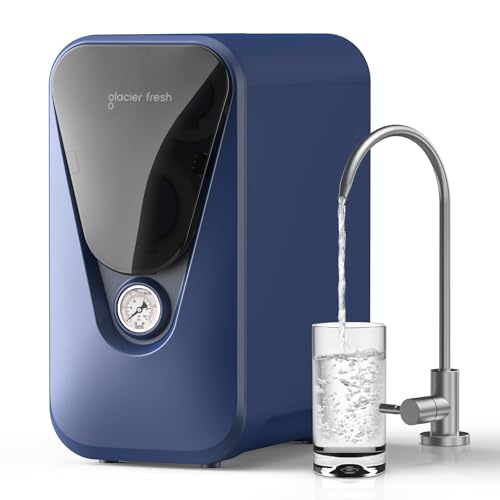
For example, the Waterdrop G3P800 Tankless Reverse Osmosis Water boasts an 800 GPD capacity and a 3:1 pure-to-drain ratio, making it both fast and eco-friendly. If you’re on a budget, the GLACIER FRESH GFU03 offers a similar 800 GPD flow without the need for electricity, making it a versatile option.
Final Thoughts
Choosing the best reverse osmosis system under sink ultimately depends on your specific needs. For a balanced blend of affordability and performance, the APEC Water ROES-50, 5-Stage Under Sink Reverse is a proven workhorse that delivers consistent purity. If you prefer a modern, tankless design with high efficiency and smart features, the Waterdrop G5P500A Reverse Osmosis System is an excellent investment. Whichever you choose, you’ll enjoy the peace of mind that comes with clean, great-tasting water straight from your tap.
Frequently Asked Questions
What is the best reverse osmosis system under sink for a small kitchen?
For compact spaces, a tankless system like the Waterdrop G3P600 is ideal because it saves up to 70% of under-sink space. It also offers a high flow rate and a smart display, making it a top choice for smaller kitchens that need big performance.
Do I need an electric pump for my RO system?
Most under sink RO systems operate on standard water pressure, but if your water pressure is low (below 40 PSI), an electric pump can boost performance. The GLACIER FRESH GFU03 is an electric-free option that works well even without a pump, as long as your water pressure meets the minimum requirement.
How often should I replace the filters in my RO system?
Filter replacement schedules vary by model and usage. Generally, pre-filters should be changed every 6 to 12 months, while the RO membrane can last 2 to 3 years. Systems with transparent housings, like the iSpring RCC7AK-BN, allow you to inspect the filters and replace them as needed. Always follow the manufacturer’s guidelines for optimal performance.
Can an RO system remove fluoride and lead?
Yes, most reverse osmosis systems are highly effective at removing fluoride, lead, and other heavy metals. For example, the iSpring RCC7-BN NSF Certified is certified to reduce lead by up to 98% and fluoride by over 97%. Always check the system’s specifications to ensure it meets your water quality needs.